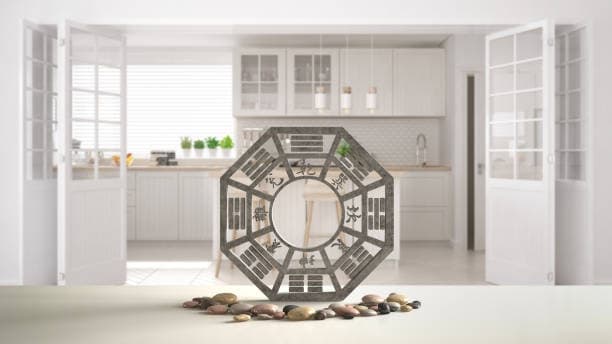
Kitchen Feng Shui: The Heart of Your Home's Energy
In Feng Shui philosophy, the kitchen represents the heart of the home—it's where nourishment is prepared and family energy is cultivated. A well-balanced kitchen supports health, abundance, and family harmony.
The Stove: Symbol of Wealth and Health
Your stove is the most important element in kitchen Feng Shui:
- The cook should be able to see the kitchen entrance while cooking
- Use all burners regularly to activate abundance
- Keep the stove clean and in good working condition
- Position mirrors behind the stove to "double" your wealth
The Kitchen Triangle
The relationship between stove, sink, and refrigerator creates the kitchen's energy flow:
- These three elements shouldn't be too close together
- Avoid having the stove directly opposite the sink (fire vs. water conflict)
- Create smooth traffic flow between these areas
- Balance is key—not too spread out, not too cramped
Colors for Nourishment
Kitchen colors should promote health and appetite:
- Earth colors: Yellow, beige, terracotta support digestion
- Green: Represents growth and fresh energy
- White: Promotes cleanliness and clarity
- Warm wood tones: Create welcoming atmosphere
- Avoid too much red: Can create excessive fire energy
Organization and Cleanliness
A cluttered kitchen blocks nourishing energy:
- Keep countertops clear and clean
- Organize pantry and cabinets regularly
- Fix leaky faucets immediately (money draining away)
- Ensure good ventilation to prevent stagnant energy
The Pantry: Abundance Storage
Your pantry represents your ability to provide:
- Keep it well-stocked but not overcrowded
- Store items at eye level for easy access
- Check expiration dates regularly
- Use clear containers to see your abundance
Dining Area Integration
If your dining area connects to the kitchen:
- Create a smooth transition between spaces
- Use similar color palettes for harmony
- Ensure adequate lighting in both areas
- Position dining table to avoid direct view of stove
Natural Elements in the Kitchen
Incorporate the five elements thoughtfully:
- Wood: Cutting boards, fresh herbs, wooden utensils
- Fire: Stove, good lighting, candles for ambiance
- Earth: Ceramic dishes, stone countertops
- Metal: Stainless steel appliances, metal hardware
- Water: Fresh flowers in water, clean windows
Knife Storage and Sharp Objects
Sharp objects can create negative energy if not handled properly:
- Store knives in blocks or magnetic strips, not loose in drawers
- Keep sharp objects out of sight when not in use
- Ensure all appliances are in good working order
- Avoid leaving sharp objects on countertops
Fresh Energy Circulation
Good energy flow supports health and vitality:
- Open windows regularly for fresh air
- Use exhaust fans to remove cooking odors
- Add plants that thrive in kitchen conditions
- Avoid blocking pathways with furniture or appliances
Lighting for Different Times
Kitchen lighting affects the energy throughout the day:
- Natural light during meal preparation
- Warm lighting for family meals
- Task lighting for detailed cooking work
- Avoid harsh fluorescent lights when possible
Water Element Balance
Water represents flow and purification:
- Keep faucets in good repair
- Use water features carefully (small herb gardens work well)
- Ensure dishwasher and other water appliances function properly
- Clean and organized sink area
Creating Gathering Energy
The kitchen often serves as a family gathering place:
- Provide comfortable seating when space allows
- Create conversation areas away from active cooking zones
- Display family photos or children's artwork
- Use warm, inviting colors and textures
Conclusion
Your kitchen's energy affects every aspect of your family's well-being. By applying these Feng Shui principles, you create a space that nourishes both body and spirit. Remember, the goal is to create harmony between function and energy flow, supporting both practical cooking needs and positive family dynamics.
Tags
Share this article
Help others discover these Feng Shui insights